08 April 2011

April 2011 Guest Interview: Daniel Marcou, Founder, streetfiction.org


Image source: libraryjournal.com
StreetLiterature: You are the creator of the esteemed website resource, StreetFiction.org. What inspired you to start this website?


DanMarcou: Over four years ago when I started working as a corrections librarian, I had a basic understanding of urban fiction from a previous library job in the late 1990's, but the genre had really grown since then. I started my website to immerse myself in the world of urban fiction and explore it, so I could provide better readers advising for my customers. 


I also love doing web design and this was an opportunity to develop a useful tool for readers and librarians.

StreetLiterature: As a corrections librarian, how have you seen Street Lit make an impact on your library work? on your patrons?


DanMarcou: It impacts my work by initially bringing some customers into the library and constantly being in huge demand. Many of my customers are big fans of the genre, and by knowing about urban fiction, I've established a "street cred" with them. Creating the website has given me knowledge and the opportunity to get to know authors which allows me to have in-depth conversations about street lit with my customers. For example, one recently asked when K'wan was coming out with a new book, so I emailed the author and found out, and then told the customer the following week.


By sharing a mutual interest and respect for what my customers are reading, I hope that I am in turn promoting books, reading and the library as a positive option in their lives. Also, if a customer trusts me to pick out a new urban fiction title for them to read then perhaps they'll also trust me to help them with other information needs like how to look for a job after their release, housing resources, or books about other issues they may dealing with. Street fiction is one bridge into a much bigger world of books and discovery at the library.


Regarding the books and my customers, I can't tell you how many times I've heard, "I never read before I came to jail." On the positive side of street lit, the books create a reading opportunity that my customers tell me that they can relate to. Others say they were bored by books, but that these books are interesting, as one person told me, "they're like movies in my head." In talking about urban fiction with my customers who are avid readers, I'll sometimes observe them becoming more critical of what they read. Some grow tired of the genre. They tell me that the stories are all the same or they feel that the details aren't authentic - "it'd never happen like that on the street." I truly believe that readers of any genre begin to critically think about what they are reading and develop their own criteria for what they enjoy. The more someone reads in a particular genre the more likely they are over time to expect more from it, and if it fails, they seek something new to read.

StreetLiterature: What do you think is most valuable about Street Lit? 


DanMarcou: I think that it is an exciting genre with action-packed fast paced stories that appeal to an audience that publishers neglected for far too long. As a librarian and reader, it gives me tremendous satisfaction to see someone happy to get something they want to read or to have a conversation with them about how much they enjoyed reading it. It's that simple! I'm not on a mission to move someone upward a biased spectrum of "better books", but I do want my customers to know there's a big old WIDE world of books out there waiting for them.


I also think that there's value in the genre because it's motivated many people to write books. Reading and writing are two of my favorites things! So to see people empowered to write and get published (or self-publish) is a wonderful thing!

StreetLiterature: If someone came to you asking for Street Lit, who would you recommend and why?


DanMarcou: K'wan will always be my first suggestion! I love his books for their action and stories. His book "Hoodlum" reminds my of a hood-version of Mario Puzo's Godfather. Also, characters are big appeal factor for me in everything that I read, and K'wan has a special talent for crafting wickedly good anti-hero characters like Gator, Preacher and Animal in his books. 


I'm also a big fan of Kenji Jasper's book, Snow (2007). Again, the main character is big factor of why the book appeals to me, but Jasper also fills the story with wonderful details about the character like this:


“I stopped liking school, but I never fell out of love with reading. Way after I stopped going to school, I’d still go to the library and grab books off the shelves. I liked stories about places and books that taught you how to do things and books that made me thankful for the life I had, that let me know that things could be so much worse, that I was blessed.” (p. 65)


Besides those two authors, I would suggest Sister Souljah as well as exploring the rich history of the genre and the world of old school street fiction with authors like Donald Goines, Clarence Cooper, Jr., and Nathan Heard.

Dan Marcou is a corrections librarian in Hennepin County, Minnesota. He won the 2009 ALA Movers & Shakers Award, a recognition that highlights librarians who are emerging leaders in the field. To contact Dan, you can follow him on Twitter via: @StreetFiction.

03 April 2011

Guest Review for: Diary of a Young Girl (2010)

Book Review by Connie Farley


Mark Anthony's "Diary of a Young Girl" is a great book about a young woman coming to terms with all the harm she caused. Mark Anthony is an intense writer of novels such as "Dogism", "Lady's Night" and the ever popular "Streets of New York" series which is a collaboration with several writers such as Anthony Whyte, Shannon Holmes, and Erick Gray.


"Diary of a Young Girl' tells a story of a young girl who was dealt a bad hand at a very young age. A life of abuse led the protagonist, Shayla, to make bad choices. She worked in a strip club illegally. She was a little con-artist. Finally, her world came crashing down on her when she was raped and left for dead. Did she learn her lesson??? No!!!!! She falsely accused a man of rape.
Like other young people who have caused a lot of damage out of response from being damaged, Shayla ultimately decided to take responsibility for her life, and grow up. Like the notorious  Scarlett O'Hara, "I'll just think about that tomorrow," Shayla pulled herself up by her bootstraps leaving the past behind.  She went to college. She started a career. But sometimes the past has a funny way of knocking on your door when you least expect it. 
Mark Anthony has crafted a powerful novel about a damaged child causing great pain, and seeking a life of redemption, free from that pain. A highly recommended read for young adults, aged 16 and up, and adults. A good addition to public library and high school library collections.

~~ Connie Farley ~~ has been a reference technician for the St. Louis (MO) Public Library system for over a decade. She runs an Urban Lit book club, whose members hail from several African and Caribbean nations. Connie is also serving on the inaugural committee for the 2010 Street Lit Book Award. 

01 April 2011

NYT Blog Post About Paul Langan Publishing Bluford Series

This is an important article to read.

It brings up issues of authorship and publishing in terms of race and culture. We've been talking about this in the last few posts here on the streetliterature blog. Be sure to check out the comments, too.

Image source: townsendpress.com

18 March 2011

Isms and Street Lit

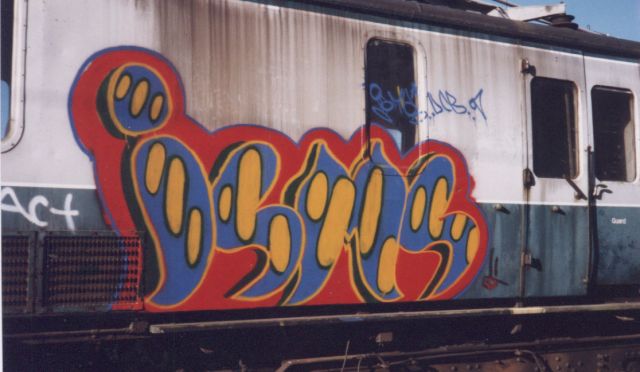
Image Source: www.graffitti.org
I participate on a few professional listservs for educators. Every once in a while someone will post a request for Street Lit titles to meet reader demand or programming ideas for Street Lit or they are seeking advice on how to approach the genre in the classroom or library.  

What I've noticed in the past few months is that there seems to be a few "isms" at play in the ways in which some educators perceive Street Lit and its readers. One  librarian posted that she was tired of the "slim pickings" of literature for African American youth as she was trying to locate "non-urban" titles. Another librarian chimed in with a "it's such a shame" kind of response.

I was bothered by this exchange, and disappointed. I then posted to the listserv my response and suggested that the librarian basically do her job and do the research to find the authors and titles she needs for her service community instead of posting thoughtless musings about the state of African American literature. Another librarian posted to try to calm my angst. While the compromise was/is appreciated, it didn't work for me...I duly wrote a full response to articulate why I was feeling annoyed. I'd like to share my full response below. Please post back and let me know what you think.

----------------------------

"I'm not saying there should be a broad spectrum of human experience in African American literature, I am saying that there IS a broad spectrum of human experience in African American literature. Af. Am. literature wasn't born 12 years ago when The Coldest Winter Ever was published. Maybe we aren't asking our students the right questions when it comes to fully understanding what it is they want to read. Perhaps they want to go beyond the problem novel, maybe they want to read horror - there's Af. Am. authors who write that ... or maybe they would be interested in romance novels or science fiction - OR - maybe they want to read a biography or poetry.

I believe we have to be realistic also, and accept the fact that Black people in America ARE an urban people, because Americans are an urban people. As of 2008, 82% of America lives in metropolitan areas. Of the 42 million African Americans, about 60% of us live in cities. The median income for African Americans is about $32K/year. (sources: http://www.census.gov; http://www.infoplease.com/spot/bhmcensus1.html).

Now if we take into consideration the publishing industry and what they do and why they do what they do - we understand that - they're going to publish what appeals to the masses. For me, it's not like anyone in the U.S. is writing or publishing any deep, empowering, OMG-esque stuff right now. If you look at the NYT bestsellers list - the fiction list is mostly escapist fluff. And for me, as a librarian, that's all right. The public reads.

Now I know I'm in the minority on this view, but I don't see a "huge discrepancy" in the publishing trends of African American literature, especially since for the past decade, we have been having a boon of African American entrepreneurs running their own, credible publishing firms. And yes, they publish street lit. But they also publish Christian fiction, romance, and other genres. Even the street lit publishers are branching into other things. Also, I think that when we decide to include all African American experience in our readings and in our research to share with the teens we're working with, we'll find a lot of authors and titles which perhaps missed our radar before. I'm taking about Caribbean, Haitian, African, and Latino (yes, Black Latino), and Black Indian works. I'm talking about Black Christian, Jewish, Islamic, Buddhist, kinds of works. I'm talking about GLBTQ works. I'm talking about those experiences - I'm talking about all of us. 

And lastly, I'd like to share this. I was recently talking to a Street Lit author - one of the biggest authors - and this author also publishes novels with their publisher - in the genre of fantasy. But you'd never know it because the novels are published under a nom de plaume. When I asked the author why they don't use their real name, they said the market shows that neither Whites nor Blacks would want to read someone like this person in this particular genre. Bottom line - even authors have to eat. And this brings up the question also that - for real? for real? Alot of times we dont' know WHO is writing WHAT. So while we are moaning about not enough of this or not enough of that .... those who are trying to give us enough aren't being supported enough in order to keep giving us what we perceive we lack.

And the beat goes on...."

04 March 2011

RA Guide to Street Lit Now Available for Pre-Order!

Greetings!

Just an FYI to let you know that my upcoming book, The Readers' Advisory Guide to Street Literature, is now available for pre-order via ALAstore and Amazon.com.

Foreword by NYT Bestselling Author, Teri Woods.

Publication date is scheduled for October 2011.

Pre-order your copy today!

02 March 2011

The Author and the Teen Reader in Street Lit

An excerpt from my essay, “Hermeneutical Understandings: Urban Teen Readership in Hip Hop Fiction” (2006). Parts are edited for clarity; such as “Hip Hop Fiction” being more accurately described as “Street Lit.”

When we think about the themes and plots of Street Lit, we see stories about a day in the life of the ‘hood where inner-city people are experience daily living struggles, navigate intense personal relationships, maybe participate in illegal activities, and all too often dying at the hands of someone’s gun. Name brand clothing labels, cars, and accessories are detailed in the stories to create a clear picture of what characters are wearing and driving. Amidst the chaos of abuse, violence and hustling, the characters are portrayed as looking very expensive.

When inner-city teens read these themes and plots over and over again, book after book (which they do), such reading ignites the imagination of the reader such that they are able to locate themselves within the context of the stories  (Morris, etal, 2006). Dennis Sumara (1996), a reader response theorist and educator, advises us that when we read, we respond to the text based on the social and cultural context in which the reading occurs.

Image Source: http://dotheknowledge.com
Just by the act of reading in and of itself, there is an “indeterminacy filling” (per Sumara), that occurs when the imagination is invoked. The gap between the imagination and reality is filled when we read text, creating heightened thinking by the reader. Thus, when inner-city teens read Street Lit, their imaginations re-create their worlds inside their minds, thus filling the gap between the imagination and their reality.

Just the pure act of reading Street Lit validates the readers’ reality of urban inner-city life, because it connects the fantastical (the sheer trauma of the drama in ghetto life) with narratives that say, “Yes, this exists, yes, this is real.” This validation empowers the reader to be open to negotiating their reading of their worlds, with an entry into critical analysis and evaluation of their environment, the people in it, as well as their own location and interaction within their own world. In Street Lit, it is the streets telling its stories back to the people of the streets.

This is powerful stuff. Street Lit has affected urban teen readers in a significant way because the pure act of reading ignites a magical connection between what was previously viewed (or read) as frivolous entertainment, to a more critical lens of hermeneutical interpretation. Once this bridge has been made, the reader’s worldview broadens and they are then asking harder questions like, “Wut about doze video gurls?” Through a gaining of critical analysis with a slower reading of their lived reality (via fiction), this new skill of critical analysis is now a part of the reading of their worlds.

When an author publishes a text, a contract (if you will) is formed between author and reader where a relationship is formed based on what I call "textual trust." When the reader decides to go past the book cover and the title, their choice to read the book infers that the reader trusts the author. Stories that relate to the reader in some way inspired "textual trust." This trust is hermeneutic-ally invested so that the reader reads through the book.
While this trusting bond may not have been the intent of the writers of Street Lit (after considerable reading and research of this genre, I posit that many authors write to be heard; to claim voice to the reading of their own worlds), this trust is an important caveat for teen readers in particularly, due to the developmental stage of life they are in, and how they process information based on their lifestage of adolescence (Appleyard, 1991).
In a world (the inner-city) where it is hard to have faith in stability or consistency due to the ever impending threat of confusion, chaos, violation and/or physical violence, to be able to trust what one reads within the ignited hermeneutic imagination of the environment of a Street Lit novel can be a significant contributor to enhancing the literacy of inner-city teen readers.
For teens to read narratives that play out the dramas of their everyday lives without them having to suffer real-life repercussions, wounds, or consequences of those dramas serves as a cautionary reconciliation of “yes, this is life in the ‘hood,” and “been there, done that, I don’t have to go out like that.” (Meaning, “I don’t have to end up like that, that doesn’t have to be me.”) Just as contemporary young adult fiction helps teens make sense of their worlds; Street Lit serves the same purpose for teens living in the same settings as those stories.
In any book, the author writes the book to talk to the reader. The reader listens to the author by reading the text. This is not a one-way monologue from the author to the reader; there is a dialogue here. With Street Lit, teens read these books in common, sharing their readings, and the books themselves (Morris, et.al., p. 2006). Eileen Landay (2004) tells us that reading fiction and biographies engages dialogue in three (3) ways: 1) within oneself (the author to him/herself and the reader to him/herself), 2) between the reader and the author, and 3) when text is shared between readers (p. 112).
Image Source: Vanessa Irvin Morris
In all these realms, we see Street Lit as a powerful conduit for readers finding authentic voice within the elements of their lives. The same happened for Hip Hop music, Spoken Word poetry, as well as the dance and art of Hip Hop. Where there was no voice for inner-city youths in mainstream culture, inner-city youths cried, “WE ARE HERE!” and found voice from their own streets to create their own culture.  The same has happened with the continuing proliferation of Street Lit.
Street Lit is a further reading (and re-reading) of inner-city voicelessness, storytelling from the streets into written text, to be re-read and re-told to the imagination, bridging lived/witnessed reality with the reality of the mind, validating the truth of one’s existence. Thus said, Street Lit is necessary for teens who seek the genre because it informs them that they are literate readers of their own worlds, and that they have a voice and place in life's reality. After all, the books are talkin'.

----------------------------------
References

Appleyard, J.A. (1991). Becoming a reader: The experience of fiction from childhood to adulthood. MA: Cambridge University Press.

Landay, E. (2004). Performance as the foundation for a secondary school literacy program: A Bakhtinian perspective. In A.F. Ball and S.W. Freedman (eds.). Bakhtinian perspectives on language, literacy and learning. NY: Cambridge University Press.

Morris, V.J., Hughes Hassell, S., Agosto, D.E., & Cottman, D.T. (2006). Street lit: Flying off teen bookshelves in Philadelphia public libraries. Journal of Young Adult Library Services (YALS) 5(1), 16-23.

Sumara, D.J. (1996). Private readings in public: Schooling the literary imagination. NY: Peter Lang.


StreetLiterature site *ON HIATUS*

Greetings, This site is *on hiatus* until further notice. There are reasons: 1/ Since street lit has become pretty mainstream in publicat...