Rita Dove, former poet laureate of the United States, penned a poem inspired by George Zimmerman's acquittal in the shooting death of unarmed African-American teen Trayvon Martin. Published July 16, 2013 via TheRoot.com.
Trayvon, Redux
It is difficult/to get the news from poems /yet men die miserably every
day/for lack/of what is found there./Hear me out/for I too am concerned/
and every man/who wants to die at peace in his bed/besides.
William Carlos Williams, “Asphodel, that Greeny Flower”
Move along, you don't belong here.
This is what you're thinking. Thinking
drives you nuts these days, all that
talk about rights and law abidance when
you can't even walk your own neighborhood
in peace and quiet, get your black ass gone.
You're thinking again. Then what?
Matlock's on TV and here you are,
vigilant, weary, exposed to the elements
on a wet winter's evening in Florida
when all's not right but no one sees it.
Where are they – the law, the enforcers
blind as a bunch of lazy bats can be,
holsters dangling from coat hooks above their desks
as they jaw the news between donuts?
Hey! It tastes good, shoving your voice
down a throat thinking only of sweetness.
Go on, choke on that. Did you say something?
Are you thinking again? Stop! – and
get your ass gone, your blackness,
that casual little red riding hood
I'm just on my way home attitude
as if this street was his to walk on.
Do you do hear me talking to you? Boy.
How dare he smile, jiggling his goodies
in that tiny shiny bag, his black paw crinkling it,
how dare he tinkle their laughter at you.
Here's a fine basket of riddles:
If a mouth shoots off and no one's around
to hear it, who can say which came first –
push or shove, bang or whimper?
Which is news fit to write home about?
© 2013 by Rita Dove
Source: http://www.theroot.com/buzz/trayvon-redux-rita-dove
Showing posts with label response. Show all posts
Showing posts with label response. Show all posts
16 July 2013


14 December 2012
(Part 2 of 3) Making Literacy Connections Via Street Lit: One Scholar's Incredible Work

StreetLiterature.com: Have your young adults suggested any authors / titles / themes
for the reading program in your research study? If so, what are they? If not,
why do you think this is so?

The kids actually suggested The Autobiography of Malcolm X probably because they saw the film and have heard a
lot about the book on the street. We cannot forget that the streets talk. You
have older guys or old heads within their families and their neighborhoods that
have done time. They will pass down in conversation books they read during
their bid. So surely Malcolm’s book will come up as well as other books, like The 48 Laws of Power and Sun Tzu's The Art of War.

I also found that films and videos were a better medium to introduce youth to books, and not vice versa. For
example, many kids were introduced to Malcolm X via the movie and not the book.
The movie tie-in of a book often opens the door for them to be interested in reading the actual book. The
kids suggested films as well. For example, they wanted to watch the 1971 Italian pseudo-documentary, "Goodbye Uncle Tom", which was crazy to me, because I had no idea they even knew that
film. Once when I screened the film to a group of juvenile inmates, as I reached to take the movie with me when I was packing to leave, they pleaded with me to leave the movie, so they could show the film to some of
their friends who were on lock down. That was amazing!
The majority of the kids are really
sharp and scholars in their own right. They are victims to a dysfunctional
world and set of circumstances which by no choice of their own, adults have
created and brought them into. That may sound cliché, but it’s true. Some of the
young brothers in my group were far more insightful and perceptive than some
college students I have encountered.
StreetLiterature.com: In what ways has Urban / Street Literature impacted your teens’ reading tastes and habits?
Once they get the information and are able to digest what is relevant to their lives, they want more information. Again, these young brothers spend the majority of their days doing absolutely nothing so they are hungry for knowledge. Now some will not be interested, of course you have those who do not want to read, probably because they can’t read, so they are going to try to disrupt the energy of the group.
But I’m realistic, I’m not there to save everybody, some will not want the information and that’s cool, maybe someday in the future they will have an epiphany and a moment of clarity where they realize how much they missed. I cannot worry about those kids because that small minority can impact the larger majority of those who want to learn. I’m not going to force anyone to participate in our group, participation is voluntary, you have to want it or else if you’re forced to do it, more than likely that kid is going to be a detriment to every else and I cannot afford that.

We’re only in the jail for a couple of hours once a week so we have to make the most of our time. Anybody who has ever worked in this setting can understand what I am saying. I think we often set the bar too low, coming in with preconceived ideas about what they can’t read or don’t want to read.
You have to understand that all people whether they are children or adults have multiple intelligences, and as an educator you have to tap into those strengths. You have to deal with the strengths first if you want to improve their self-esteem. In short for those who love reading I believe that my mentorship has increased their breadth and range of what they will read and that’s a good thing. For others, they may be more visual, actually I respect that because I am more visual. That kid may be the next Cle Bone Sloan. So I have to tap into his strengths as well. That young brother may be more inclined now to make a film that documents his hood and how structural violence has caused the direct violence he witnesses around him.
--- Please post your questions and comments to this interview, below. We'd love to get a meaningful discussion started about Dr. Richardson's work. Next week's final installment for this interview series concludes with Dr. Richardson's discussion of the scholarly thinking of inner-city youth (yes, you read that correctly). ---
--- Please post your questions and comments to this interview, below. We'd love to get a meaningful discussion started about Dr. Richardson's work. Next week's final installment for this interview series concludes with Dr. Richardson's discussion of the scholarly thinking of inner-city youth (yes, you read that correctly). ---
13 December 2012
VIDEO: YA Urban Fiction Featured on FOX News in Chicago
Urban Fiction gets African American teens excited about reading
: The story and characters don't have to be familiar for a reader to get lost in a good book, but everyone likes to see their experiences in a story.
03 April 2011
Guest Review for: Diary of a Young Girl (2010)

Mark Anthony's "Diary of a Young Girl" is a great book about a young woman coming to terms with all the harm she caused. Mark Anthony is an intense writer of novels such as "Dogism", "Lady's Night" and the ever popular "Streets of New York" series which is a collaboration with several writers such as Anthony Whyte, Shannon Holmes, and Erick Gray.
"Diary of a Young Girl' tells a story of a young girl who was dealt a bad hand at a very young age. A life of abuse led the protagonist, Shayla, to make bad choices. She worked in a strip club illegally. She was a little con-artist. Finally, her world came crashing down on her when she was raped and left for dead. Did she learn her lesson??? No!!!!! She falsely accused a man of rape.
Like other young people who have caused a lot of damage out of response from being damaged, Shayla ultimately decided to take responsibility for her life, and grow up. Like the notorious Scarlett O'Hara, "I'll just think about that tomorrow," Shayla pulled herself up by her bootstraps leaving the past behind. She went to college. She started a career. But sometimes the past has a funny way of knocking on your door when you least expect it.
Mark Anthony has crafted a powerful novel about a damaged child causing great pain, and seeking a life of redemption, free from that pain. A highly recommended read for young adults, aged 16 and up, and adults. A good addition to public library and high school library collections.
~~ Connie Farley ~~ has been a reference technician for the St. Louis (MO) Public Library system for over a decade. She runs an Urban Lit book club, whose members hail from several African and Caribbean nations. Connie is also serving on the inaugural committee for the 2010 Street Lit Book Award.
18 March 2011
Isms and Street Lit
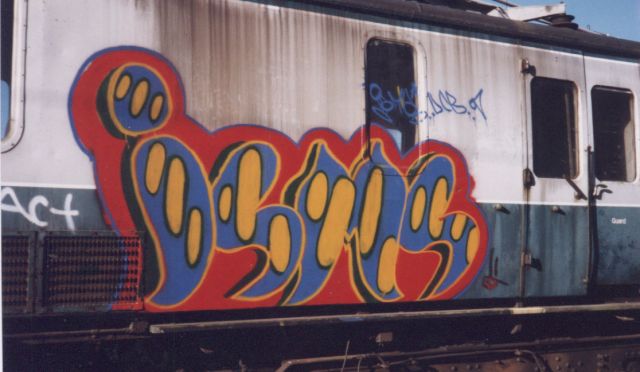 |
| Image Source: www.graffitti.org |
I participate on a few professional listservs for educators. Every once in a while someone will post a request for Street Lit titles to meet reader demand or programming ideas for Street Lit or they are seeking advice on how to approach the genre in the classroom or library.
What I've noticed in the past few months is that there seems to be a few "isms" at play in the ways in which some educators perceive Street Lit and its readers. One librarian posted that she was tired of the "slim pickings" of literature for African American youth as she was trying to locate "non-urban" titles. Another librarian chimed in with a "it's such a shame" kind of response.
I was bothered by this exchange, and disappointed. I then posted to the listserv my response and suggested that the librarian basically do her job and do the research to find the authors and titles she needs for her service community instead of posting thoughtless musings about the state of African American literature. Another librarian posted to try to calm my angst. While the compromise was/is appreciated, it didn't work for me...I duly wrote a full response to articulate why I was feeling annoyed. I'd like to share my full response below. Please post back and let me know what you think.
----------------------------
"I'm not saying there should be a broad spectrum of human experience in African American literature, I am saying that there IS a broad spectrum of human experience in African American literature. Af. Am. literature wasn't born 12 years ago when The Coldest Winter Ever was published. Maybe we aren't asking our students the right questions when it comes to fully understanding what it is they want to read. Perhaps they want to go beyond the problem novel, maybe they want to read horror - there's Af. Am. authors who write that ... or maybe they would be interested in romance novels or science fiction - OR - maybe they want to read a biography or poetry.
I believe we have to be realistic also, and accept the fact that Black people in America ARE an urban people, because Americans are an urban people. As of 2008, 82% of America lives in metropolitan areas. Of the 42 million African Americans, about 60% of us live in cities. The median income for African Americans is about $32K/year. (sources: http://www.census.gov; http://www.infoplease.com/spot/bhmcensus1.html).
Now if we take into consideration the publishing industry and what they do and why they do what they do - we understand that - they're going to publish what appeals to the masses. For me, it's not like anyone in the U.S. is writing or publishing any deep, empowering, OMG-esque stuff right now. If you look at the NYT bestsellers list - the fiction list is mostly escapist fluff. And for me, as a librarian, that's all right. The public reads.
Now I know I'm in the minority on this view, but I don't see a "huge discrepancy" in the publishing trends of African American literature, especially since for the past decade, we have been having a boon of African American entrepreneurs running their own, credible publishing firms. And yes, they publish street lit. But they also publish Christian fiction, romance, and other genres. Even the street lit publishers are branching into other things. Also, I think that when we decide to include all African American experience in our readings and in our research to share with the teens we're working with, we'll find a lot of authors and titles which perhaps missed our radar before. I'm taking about Caribbean, Haitian, African, and Latino (yes, Black Latino), and Black Indian works. I'm talking about Black Christian, Jewish, Islamic, Buddhist, kinds of works. I'm talking about GLBTQ works. I'm talking about those experiences - I'm talking about all of us.
And lastly, I'd like to share this. I was recently talking to a Street Lit author - one of the biggest authors - and this author also publishes novels with their publisher - in the genre of fantasy. But you'd never know it because the novels are published under a nom de plaume. When I asked the author why they don't use their real name, they said the market shows that neither Whites nor Blacks would want to read someone like this person in this particular genre. Bottom line - even authors have to eat. And this brings up the question also that - for real? for real? Alot of times we dont' know WHO is writing WHAT. So while we are moaning about not enough of this or not enough of that .... those who are trying to give us enough aren't being supported enough in order to keep giving us what we perceive we lack.
And the beat goes on...."
11 March 2011
02 March 2011
The Author and the Teen Reader in Street Lit

An excerpt from my essay, “Hermeneutical Understandings: Urban Teen Readership in Hip Hop Fiction” (2006). Parts are edited for clarity; such as “Hip Hop Fiction” being more accurately described as “Street Lit.”
When we think about the themes and plots of Street Lit, we see stories about a day in the life of the ‘hood where inner-city people are experience daily living struggles, navigate intense personal relationships, maybe participate in illegal activities, and all too often dying at the hands of someone’s gun. Name brand clothing labels, cars, and accessories are detailed in the stories to create a clear picture of what characters are wearing and driving. Amidst the chaos of abuse, violence and hustling, the characters are portrayed as looking very expensive.
When inner-city teens read these themes and plots over and over again, book after book (which they do), such reading ignites the imagination of the reader such that they are able to locate themselves within the context of the stories (Morris, etal, 2006). Dennis Sumara (1996), a reader response theorist and educator, advises us that when we read, we respond to the text based on the social and cultural context in which the reading occurs.
 |
| Image Source: http://dotheknowledge.com |
Just the pure act of reading Street Lit validates the readers’ reality of urban inner-city life, because it connects the fantastical (the sheer trauma of the drama in ghetto life) with narratives that say, “Yes, this exists, yes, this is real.” This validation empowers the reader to be open to negotiating their reading of their worlds, with an entry into critical analysis and evaluation of their environment, the people in it, as well as their own location and interaction within their own world. In Street Lit, it is the streets telling its stories back to the people of the streets.
This is powerful stuff. Street Lit has affected urban teen readers in a significant way because the pure act of reading ignites a magical connection between what was previously viewed (or read) as frivolous entertainment, to a more critical lens of hermeneutical interpretation. Once this bridge has been made, the reader’s worldview broadens and they are then asking harder questions like, “Wut about doze video gurls?” Through a gaining of critical analysis with a slower reading of their lived reality (via fiction), this new skill of critical analysis is now a part of the reading of their worlds.

When an author publishes a text, a contract (if you will) is formed between author and reader where a relationship is formed based on what I call "textual trust." When the reader decides to go past the book cover and the title, their choice to read the book infers that the reader trusts the author. Stories that relate to the reader in some way inspired "textual trust." This trust is hermeneutic-ally invested so that the reader reads through the book.
While this trusting bond may not have been the intent of the writers of Street Lit (after considerable reading and research of this genre, I posit that many authors write to be heard; to claim voice to the reading of their own worlds), this trust is an important caveat for teen readers in particularly, due to the developmental stage of life they are in, and how they process information based on their lifestage of adolescence (Appleyard, 1991).
In a world (the inner-city) where it is hard to have faith in stability or consistency due to the ever impending threat of confusion, chaos, violation and/or physical violence, to be able to trust what one reads within the ignited hermeneutic imagination of the environment of a Street Lit novel can be a significant contributor to enhancing the literacy of inner-city teen readers.
For teens to read narratives that play out the dramas of their everyday lives without them having to suffer real-life repercussions, wounds, or consequences of those dramas serves as a cautionary reconciliation of “yes, this is life in the ‘hood,” and “been there, done that, I don’t have to go out like that.” (Meaning, “I don’t have to end up like that, that doesn’t have to be me.”) Just as contemporary young adult fiction helps teens make sense of their worlds; Street Lit serves the same purpose for teens living in the same settings as those stories.
In any book, the author writes the book to talk to the reader. The reader listens to the author by reading the text. This is not a one-way monologue from the author to the reader; there is a dialogue here. With Street Lit, teens read these books in common, sharing their readings, and the books themselves (Morris, et.al., p. 2006). Eileen Landay (2004) tells us that reading fiction and biographies engages dialogue in three (3) ways: 1) within oneself (the author to him/herself and the reader to him/herself), 2) between the reader and the author, and 3) when text is shared between readers (p. 112).
 |
| Image Source: Vanessa Irvin Morris |
Street Lit is a further reading (and re-reading) of inner-city voicelessness, storytelling from the streets into written text, to be re-read and re-told to the imagination, bridging lived/witnessed reality with the reality of the mind, validating the truth of one’s existence. Thus said, Street Lit is necessary for teens who seek the genre because it informs them that they are literate readers of their own worlds, and that they have a voice and place in life's reality. After all, the books are talkin'.
----------------------------------
References
Appleyard, J.A. (1991). Becoming a reader: The experience of fiction from childhood to adulthood. MA: Cambridge University Press.
Landay, E. (2004). Performance as the foundation for a secondary school literacy program: A Bakhtinian perspective. In A.F. Ball and S.W. Freedman (eds.). Bakhtinian perspectives on language, literacy and learning. NY: Cambridge University Press.
Morris, V.J., Hughes Hassell, S., Agosto, D.E., & Cottman, D.T. (2006). Street lit: Flying off teen bookshelves in Philadelphia public libraries. Journal of Young Adult Library Services (YALS) 5(1), 16-23.
Sumara, D.J. (1996). Private readings in public: Schooling the literary imagination. NY: Peter Lang.
11 February 2011
"The People Won!" - Julia, age 13
 | ||
| Wael Ghonim. Image Source: allfacebook.com |
I am not a hero.
I am a very ordinary person.
The heroes are the ones in the street."
-- Wael Ghonim, the Google executive who helped organize Egypt's initial protests, following his release from jail; the next day, Ghonim addressed a huge rally in Tahrir Square.
This quote and caption is from page 17 of the February 21, 2011 issue of Time Magazine.
 | |
| Wael Ghonim being taken away by Egyptian police, circa January 31, 2011. Image Source: http://pumabydesign001.wordpress.com |
28 November 2010
Towards A Def'n 4 Street Lit
Greetings;
Happy Holidays to you! I've just spent a wonderful Thanksgiving holiday with my family and am looking forward to an equally fantastic Christmas and New Year. I hope your Holiday season is full of wonderful blessings!

Lately, I've been thinking about Street Lit and how it is defined or not. I believe we need to have a consistent definition of what the genre is. Is it urban fiction? Is it African American literature? Is it pulp fiction? Or is it its own categorization?
In my upcoming book, I situate Street Lit as a sub-genre of Urban Fiction. For me, "urban fiction" is fiction about urban experiences and settings. Street Lit is definitely about urban experiences and settings, albeit, specific urban experiences and settings that self-defines itself based on the shared socio-economic status of a citizenry. Many conflate Street Lit with the "Black/African-American experience." However, this conflation negates the historicity of Street Lit as represented in novels chronicling European immigrant experiences in a new America, southern migration experiences in a new region, or the daily street experiences of British urchins and the London poor during Victorian era England, to name a few other locations for Street Lit, within a historical context.
Contemporary Street Lit is not just a "Black/Latino thing" just because Blacks and Latinos predominately populate low-income city enclaves in current times. Street Lit chronicles the urban narratives of whoever is populating low-income city enclaves in certain times and places.
That's why the story of Daniel Defoe 's Moll Flanders (1722) can be considered Street Lit because it chronicles the life and times of a protagonist as she navigates being born to an inmate mother, growing up as a street urchin, then working as a prostitute, and ultimately conning life as a true "O.G." as she pulls off a really impressive caper that sets her up for life.
Moll's life is definitely a character with low-income/marginalized status in a large urban city setting. Like current Street Lit protagonists, our 1722 Moll Flanders does what she has to do to survive, not too dissimilar from Sister Souljah's 1999 protagonist, Winter Santiaga, or Kiki Swinson's 2004 protagonist, Kira, in the Wifey series.
There are many titles written about the daily lives of low-income city residents, stemming from the bardic traditions of fictional and non-fictional Street Literature of yesteryear in the formats of pamphlets, broadsides, and ballad lyrics. These street-based, literary, artistic traditions are reminiscent of Hip Hop's role as the bardification of ghetto life in contemporary society. As the old saying goes, "nothing is new under the sun."
This historicity of urban narratives of the city poor and disenfranchised informs us that Street Lit is not race-based, but class-based; again confirming that Street Lit is not necessarily a "Black/Latino thing" - Street Lit is necessarily a socio-economic, urban thing.
When you include fictional texts, along with non-fictional texts such as poetry (e.g. Tupac Shakur's The Rose that Grew from Concrete) and biographies/memoirs (e.g. , Philippe Bourgois' In Search of Respect: Selling Crack in El Barrio) we come to understand that "Street Lit" is the fictional arm of the compleat genre of "Street Literature."
We also must be mindful that there is a broader spectrum of urban works that are decidedly not Street Lit - but they are still urban narratives and representative of urban experience. Such genres that come to mind include, Chick Lit, Lad Lit, Urban Fantasy and Urban Erotica as literary genres about urban experiences. Place these genres together with Street Lit, and you have the contemporary genre called, "Urban Fiction."
So I argue that contemporary Street Lit is a sub-genre of Urban Fiction, and more importantly, an important contribution to the historic realm of the genre of Street Literature as a whole. Thus Street Lit, as we consume it today, with stories primarily about Black and Latino peoples, is a historic happenstance, not a racially defining element of the genre. As a major contribution to the Street Literature realm, Street Lit historicizes contemporary ghetto life as an illustration of the looming presence of a lumpenproletariat in a hegemonic, patriarchal, capitalistic society. T'is why Street Lit needs and deserves to be heard, discussed, and respected.
Subscribe to:
Posts (Atom)
-
 Greetings All! Welps, here it is! This is the book cover for my upcoming text, The Readers Guide to Street Literature, published by the Ame...
 -
 In recent months I have been listening to librarians (via conferences, book club meetings, conversations) from various areas of the countr...
 -
Image Source: kwanfoye.com Premier Street Lit Author, K'wan Foye , attended the Pennsylvania African American Library Association (PA...


