Showing posts with label teens. Show all posts

03 September 2014

In the Margins Presents 2015 Book List Nominations


In the Margins (ITM) is proud to present the official nominations for our 2015 book list, to date. New titles are still being considered, and ITM is seeking teen feedback to assist in producing a list of finalists. Anyone is welcome to nominate a title; click here for the nomination form. A committee member will review the information and consider it for official nomination.

ITM, under the umbrella of Library Services for Youth in Custody, strives to bring to light self-published and small press published titles by, for, and about people in poverty, on the streets, in custody, or otherwise living in the margins. Books from larger publishers are also considered if they fit our charge. Teens are the target audience for the lists we create and promote.

We hope our book list will empower librarians working in difficult situations to legitimize their book choices in order to promote positive reading and literacy activities for teens in the margins.

We will have openings to serve in January 2015 for the 2016 list (click here for membership application). Please let us know of your interest!!

In the Margins Official Nominations, 2015

Beaty, Daniel. Knock, Knock: My Dad’s Dream for Me. Little, Brown. December 2013. 40p. HC $18.00. ISBN 9780316209175. Why isn't his dad around to play Knock, Knock jokes anymore?

Booth, Coe. Kinda Like Brothers. Scholastic. August 2014. 256p. HC $17.99. ISBN 9780545224963. Jarrett is kinda mad he has to share a room with Kevon, a foster kid. They aren’t friends, they aren’t brothers, and they aren’t exactly enemies. But sometimes it sure feels like it.

Burgess, Melvin. The Hit. Chicken House. February 2014. 304p. HC $17.99. ISBN 9780545556996. Take the hit. Live the most intense week of your life. Then die. Is life during these hard times so bad that this sounds like a great idea?

Butler, Pacc. From God’s Monster to the Devil’s Angel. CreateSpace. January 2014. 170p. PB $14.95. ISBN 9781494771669. After a childhood full of abuse, is a life of crime on the streets with gangs his only option?

Canion, Ebony. Left for Dead. Life Changing Books. February 2014. 228p. PB $15.99. ISBN 9781934230596. Ebony's tragedy-filled life takes a deadly turn when a woman with a grudge deliberately drives over her and drags her body through the street under her car.

Chappell, Crissa-Jean. More Than Good Enough. Flux. January 2014. 216p. PB $8.99. ISBN 978-0738736440. Trent doesn’t fit in on the Rez with his dad, who just got out of jail, or with his mom, who dumped him, but he does fit with Pippa. Will her acceptance be enough to help him realize that it’s enough to just be himself?

De Vries, Maggie. Rabbit Ears. HarperTrophy Canada. September 2014. 288p. PB $8.99. ISBN 9780062332905. Will Kaya escape her demons on the drug-infested streets?

Dragon, Laura Roach. Hurricane Boy. Pelican. March 2014. 160p. PB $8.95. ISBN 9781455619160. When their broken family is left homeless and separated from their sick grandmother, siblings must struggle to stay together after Hurricane Katrina.

Ewing, Lynne. The Lure. Balzer + Bray. February 2014. 288p. HC $17.99. ISBN 9780062206886. Gangs, girls, and guns: a deadly combination.

Giles, Gail. Girls Like Us. Candlewick. May 2014. 224p. HC $16.99. ISBN 9780763662677. Quincy and Biddy rely on their natural sense of survival to make it in the real world after a lifetime of abuse and abandonment.

Hall, Shyima. Hidden Girl: The True Story of a Modern-Day Child Slave. Simon & Schuster. January 2014. 240p. HC $17.99. ISBN 9781442481688. Sold into servitude by her Egyptian parents, Shyima sees no hope of escape when her captors bring her to the United States.

Hillman, Bill. The Old Neighborhood. Curbside Splendor. April 2014. 500p. PB $15.95. 9781940430003. Joe can’t seem to escape his destiny as a Chicago gang member, even as drug addiction and violence threaten to destroy his family and friends.

Jones, Patrick. Bridge. Darby Creek. August 2014. 96p. HC $27.99. ISBN 9781467739030. PB $7.95. ISBN 9781467744829. José’s life just got harder when his dad has a medical emergency and lands in jail.

Jones, Patrick. Controlled. Darby Creek. August 2014. 112p. HC $27.99. ISBN 9781467739023. PB $7.95. ISBN 978-1467744836. Misty is out of control, especially since her mother just died. But it's nothing new - except to Rachel, her cousin. Because now Misty is moving in with Rachel and taking over. Drama, trouble and just possibly, good girl Rachel going bad.

Jones, Patrick. Target. Darby Creek. August 2014. 128p. HC $27.99. ISBN 9781467739009. PB $7.95. ISBN 9781467744850.  Native American Frankie's trying to leave the gang and start new at Rondo High. His mom moved so that he would get away from the negative influences he had before. His dad's in prison and is egging him on to take revenge, and his cousins are in his new neighborhood doing the same. What will Frankie do?

Knight, Michelle. Finding Me: A Decade of Darkness, a Life Reclaimed. Weinstein. May 2014. 280p. HC $14.98. ISBN 9781602862562. Kidnapped and tortured for 11 years, Michelle survives the horrors of captivity under the control of psychopath Ariel Castro.

Kuehn, Stephanie. Complicit. St. Martin’s Griffin. June 2014. 256p. HC $19.95. ISBN  9781250044594. Jamie has tried hard to fit in with his adoptive parents, but his sister hasn’t done anything but get into trouble, finally landing in jail for attempted murder. Now she’s out, and Jamie is sure she’s coming for him.

K’Wan. Black Lotus. Akashic. May 2014. 128p. HC $19.95. ISBN 9781617752650. PB $11.95. ISBN 9781617752667. Murder! Mystery! Intrigue! Can you figure out the assassin's game?

Miles, Michelle. The High Price I Had to Pay 2: Sentenced to 30 Years as a Nonviolent, First Time Offender. Voices International. November 2013. 66p. PB $7.99.  ISBN 9780991104109. She had it all and didn’t think twice until she got arrested by the Feds.

Morgan, Kass. The 100. September 2013. Little, Brown. 336p. HC $18.00. ISBN 978-0316234474. PB $10.00. ISBN 978-0316234498. One hundred teens, chosen to return to Earth after nuclear war has exiled humanity to life on spaceships, have one thing in common: criminal pasts. Given no choice, they face a dangerous world and a more dangerous enemy – each other.

Reynolds, Jason. When I Was the Greatest. Atheneum. January 2014. 240p. HC $17.99. ISBN 9781442459472. Friends + bad choices = deadly circumstances.

Shiraz, Yasmin. Accused. Still Eye Rise. May 2014. 274p. PB $11.95. ISBN 9780971817487. Date rapist on campus. Can Tashera stop him? Can Ahmed prove it's not him?

Sitomer, Alan Lawrence. Caged Warrior. Disney Hyperion. May 2014. 224p. HC $15.99. ISBN 9781423171249. Will M.D.’s killer instincts in MMA lead him to a better life?

Stein, Deborah Jiang. Prison Baby. Beacon. March 2014. 176p. PB $14.00. ISBN 9780807098103. Born in a prison to an addicted mother, can Deborah ever fit in?

Van Diepen, Allison. On the Edge. HarperTeen. November 2014. 304p. HC $17.99. ISBN 9780062303448. The only witness to a homicide, Maddie is protected by Lobos, the sexy leader of Destino's gang.

Workman, P.D. Ruby: Between the Cracks. PD Workman. February 2014. 486p. PB $16.90. ISBN 978-0992153953. Ruby's life is filled with gangs, drugs, foster families, and pregnancies but she is tough and wants to run her life on her terms.  Can she ever find happiness?

Yamini, Omar. What’s Wrong With You! Smashwords. January 2014. PB $19.95. ISBN 9780991574605. A gritty eyewitness account of life behind bars that tears to shreds its hip-hop illusion of urban coolness.

Zusman, Angela Beth. The Griots of Oakland. Story for All. October 2013. 206p. HC $59.99. ISBN 9780988763111. PB $14.99. ISBN 978-0988763104. 100 African-American young men from Oakland, California tell it like it is.


Current committee:
Chair: Amy Cheney, Librarian, Juvenile Justice Center, Alameda County, CA Sabrina Carnesi, Librarian, Crittenden Middle School, VA Dale Clark, Fraser Park Secondary, Burnaby Youth Custody Services, Burnaby, BC Canada Joe Coyle, Project Coordinator, Mix IT Up!, University of Illinois at Urbana-Champaign, IL Marvin DeBose Sr., Adult – Teen Librarian, Free Library of Philadelphia, PA.
Mackenzie Magee, Maggie Novario, Teen Librarian, Fort Vancouver Regional Library District, WA Dr. Kerry Sutherland, Youth Services Librarian, Akron-Summit County Public Library, OH Amy Wander, Public Services Manager, Lafayette Public Library, LA


Contact:
Amy Cheney
Write to Read Juvenile Hall Literacy
San Leandro, CA 94578

21 December 2012

(Part 3 of 3): Making Literacy Connections Via Street Lit: One Scholar's Incredible Work

In this last installment of Dr. Richardson's interview, he discusses his work with pairing incarcerated teen boys with college attending males. Dr. Richardson also shares his ideas on how librarians can be reach out and serve inner-city teens, particularly low-income boys.

StreetLiterature.com: Your research pairs incarcerated males with college attending males. In what ways have you observed reading serving as a bridge of personal, social, and/or cultural understanding and/or edification between the young men? In other words, what have been the most salient outcomes from your work thus far? Any outcomes related to public and/or school libraries?

The most salient outcomes have been increasing the critical thinking skills of the young brothers we work with. Far too many children and adults lack critical thinking skills. The schools have basically destroyed the critical thinking skills of children because the curriculum is geared towards improving scores on standardized tests.

That kind of curriculum encourages and reinforces rote thinking. The kids become almost robotic in their thought process. They’re merely expected to regurgitate what they have memorized and I emphasize memorized. We give youth the tools to deconstruct the world around them.

Once our kids leave from under our tutelage we expect them to be critical thinkers. They should be asking why? How? Then we expect them to do the analysis and provide a solution. We have some really deep conversations about the dumbing down of hip hop. They totally get it.

They know what music is garbage and what music provides mental nourishment. When we have ciphers and they get to spit their lyrics, their word play epitomizes that they are critical thinkers. Our children are street scholars. They can break the street and society down better than most sociologists, they just need the tools. Their brains are the toolbox. We just need to give them the tools to fill it.

StreetLiterature.com: How do you see libraries best serving lower income city children and teens (particularly boys) in their authentic, original ways of reading, writing, and multimedia?

Libraries have to find innovative ways to become cool to low-income boys. That can happen in several ways. One way is libraries can partner with organized youth sports leagues where study halls at the local library become a mandatory part of whether they kids play.

For example, I coached in a youth basketball league in East New York, Brooklyn, where we had a mandatory study hall. There were plenty of Saturdays that I had to monitor the study halls. Boys could not play in the games if they did not participate in the study hall. I also observed this approach used in other youth basketball leagues in New York City. The leagues would require that each player attend study hall once a week at the local library and the coaches were required to monitor it. Coaches I worked with definitely participated.

To expand on this approach to involve the library, one day of the week could be reserved for study hall at the library where coaches replace practice with a study hall. Once kids get into the routine of going to the library and know that they won’t be able to play unless they attend the library study hall, kids will eventually become accustomed to going to the library.

A story I'd like to share: when I was younger I played football for the Northwest Bantams in Philadelphia, and there was a library directly across the street from the field where we practiced. If the coaches had had study hall there or lectures we were required to attend, I would have probably been more interested in the library. The saddest part of this story is that I have never been in that library and it was no less than 50 feet from where I played football for two years.

There is a certain perception of librarians that they are not cool, but that’s not true. However the onus is on librarians to change that stereotype. Librarians have to step outside of their comfort zone and silos. Times have changed. Librarians have to get out there on the ground and get their hands dirty. Get out into the community and see what’s going on. Find out what boys like and don’t like. You have to meet them where they are, that is the first principal in providing any social service.

Once the kids make it to the library, the librarian has to make it an engaging place for them to want to come back. Now that approach could include inviting guest speakers such as popular rappers. I’m from Philadelphia, so to bring a rapper, such as a Meek Mill, Freeway, or Cassidy (all native Philadelphians) to the library to discuss how reading is instrumental in the way they create their rhymes would be very relatable to the kids in the community from which I come.

I believe that Cassidy attended Central High (note from StreetLiterature.com: Central High School is a nationally ranked high-achieving magnet school) which is one of the top schools in Philadelphia. Just by listening to Cassidy's lyrics, particularly his metaphors, you can tell that he is a critical thinker. To invite home-grown artists and performers to the local libraries: Libraries can be hip hop.

Librarians have to step into the 21st century. Kids have Facebook, Twitter and 2 Chainz. They are not just going to show up at the doorstep of the library. Whatever the method is for getting them there, I believe it has to be incentivized. Dr. Roland Fryer, a young Black male Professor at Harvard, has shown that providing low-income youth with incentives can improve academic performance. So if a library wants to reach out to boys, provide incentives such as free tickets to professional basketball or football games, and for those who come consistently, they can be made eligible to be in a raffle for prizes. Creative librarians are effective librarians.

StreetLiterature.com: Thank you Dr. Richardson for sharing your research and insights with us. While this blog appears quiet on the surface, I am sure that you have given many subscribers fresh ideas about the possibilities for working with lower-income teen boys in order to enhance their reading interests and tastes. Thank you so much!


This is the last installment for Dr. Richardson's interview. Feel free to comment and ask questions. We'd really like to get a meaningful discussion started about serving city teens in libraries.

14 December 2012

(Part 2 of 3) Making Literacy Connections Via Street Lit: One Scholar's Incredible Work

In last week's installment of Dr. Joseph Richardson's interview he talked about the need for educators to support the reading public with literacy practices from early ages. This week, Dr. Richardson discusses actual titles that his teens have requested and read. He advocates for educators to (re)perceive children as "scholars in their own right". Read on:

StreetLiterature.com: Have your young adults suggested any authors / titles / themes for the reading program in your research study? If so, what are they? If not, why do you think this is so?


The kids actually suggested The Autobiography of Malcolm X probably because they saw the film and have heard a lot about the book on the street. We cannot forget that the streets talk. You have older guys or old heads within their families and their neighborhoods that have done time. They will pass down in conversation books they read during their bid. So surely Malcolm’s book will come up as well as other books, like The 48 Laws of Power and Sun Tzu's The Art of War.

I also found that films and videos were a better medium to introduce youth to books, and not vice versa. For example, many kids were introduced to Malcolm X via the movie and not the book. The movie tie-in of a book often opens the door for them to be interested in reading the actual book. The kids suggested films as well. For example, they wanted to watch the 1971 Italian pseudo-documentary, "Goodbye Uncle Tom", which was crazy to me, because I had no idea they even knew that film. Once when I screened the film to a group of juvenile inmates, as I reached to take the movie with me when I was packing to leave, they pleaded with me to leave the movie, so they could show the film to some of their friends who were on lock down. That was amazing!

The majority of the kids are really sharp and scholars in their own right. They are victims to a dysfunctional world and set of circumstances which by no choice of their own, adults have created and brought them into. That may sound cliché, but it’s true. Some of the young brothers in my group were far more insightful and perceptive than some college students I have encountered.

StreetLiterature.com: In what ways has Urban / Street Literature impacted your teens’ reading tastes and habits?

Once they get the information and are able to digest what is relevant to their lives, they want more information. Again, these young brothers spend the majority of their days doing absolutely nothing so they are hungry for knowledge. Now some will not be interested, of course you have those who do not want to read, probably because they can’t read, so they are going to try to disrupt the energy of the group. 

But I’m realistic, I’m not there to save everybody, some will not want the information and that’s cool, maybe someday in the future they will have an epiphany and a moment of clarity where they realize how much they missed. I cannot worry about those kids because that small minority can impact the larger majority of those who want to learn. I’m not going to force anyone to participate in our group, participation is voluntary, you have to want it or else if you’re forced to do it, more than likely that kid is going to be a detriment to every else and I cannot afford that. 

We’re only in the jail for a couple of hours once a week so we have to make the most of our time. Anybody who has ever worked in this setting can understand what I am saying. I think we often set the bar too low, coming in with preconceived ideas about what they can’t read or don’t want to read. 

You have to understand that all people whether they are children or adults have multiple intelligences, and as an educator you have to tap into those strengths. You have to deal with the strengths first if you want to improve their self-esteem.  In short for those who love reading I believe that my mentorship has increased their breadth and range of what they will read and that’s a good thing. For others, they may be more visual, actually I respect that because I am more visual. That kid may be the next Cle Bone Sloan. So I have to tap into his strengths as well. That young brother may be more inclined now to make a film that documents his hood and how structural violence has caused the direct violence he witnesses around him.

--- Please post your questions and comments to this interview, below. We'd love to get a meaningful discussion started about Dr. Richardson's work. Next week's final installment for this interview series concludes with Dr. Richardson's discussion of the scholarly thinking of inner-city youth (yes, you read that correctly). --- 

30 November 2012

VIDEO: Connecting Street Lit in the Classroom

Library Media Specialist, K.C. Boyd, from Chicago, IL, published a student-run video newsletter for her school, Wendell Phillips Academy High School. In this installment, there is a segment that shows how street lit is used successfully in the classroom. Time: 07:23 //

29 May 2012

Chicago Teens Use Nooks to Read Street Lit Books

Chicago Librarian Media Specialist, KC Boyd, has a book club of high school students who read Street Lit. As part of a grant project, KC has introduced the teens to reading their books on the Nook. The video below shows the students talking about their book club and reading experiences. Enjoy!


18 December 2011

New Reads: My 2011 Holiday Picks


Greetings!
As you are enjoying the end-of-year holidays, here are some of my top recently published picks for Street Lit that will go great with a log fire, a blanket, and some coffee or hot cocoa on a snowy day.

MYSTERY
Image credit: Amazon.com
 My Amazon.com review of NY'S FINEST: Masquerade:

5.0 out of 5 stars All I can say is ... WOW!, December 17, 2011
"Teri Woods hits it out the ballpark with the presentation of New York's Finest: Masquerade,  authored by Sam Black. This novel offers a fast-paced, suspense-filled romp that will keep you distracted from your life as you sit on the edge of your seat, not able to put the book down (at least that's what happened to me!). You'll be fascinated by the intertwining connections of the characters and the intricate attention paid to details for a very fulfilling plot. Woods/Black turns the table on gender roles - the women have the upper hand in this intricate, complicated tale that is carefully laid out before you as you read who does what to whom, while watching a chess game of life played out in entertaining fashion. When they say that street lit/urban fiction is "like a movie in your head" - Teri Woods has mastered this craft. Read this - you'll have a good time! Can't wait for part 2! -- Vanessa Irvin Morris (c/o streetliterature.com)"

To order NY'S Finest: Masquerade: http://www.amazon.com/NYs-Finest-Masquerade-Sam-Black/dp/0977323463/

POETRY/YA
Image credit: funkybook.yolasite.com
My 2cents: This is a debut release from Indie author and poet, Christian Loriel. I greatly enjoyed this book: it is lyrical, real, raw, gritty, and creatively done. I read the poems and was transported to the hood of FunkY; I felt like I had a seat on one of the stoops, for sure. The author's arrangement of the book is awesome too: via free-form verse poetry, you meet the residents of FunkY right where they live - up close and personal, at home and on the streets. If you can add this creative verse novel to your library collection, adults and teens will grab it, for sure.

Author's Synopsis:
FunkY is a look at the South Memphis I know, love, and yet question. In South Memphis, a part of town exhausted by drugs, crime, and deferred dreams, there is "Funky" Avenue, a street full of people who have things to tell you. You will go door-to-door and hear each of their secrets, joys, sorrows, regrets, and even their opinions of what's going on in the house next door. It all begins with a missing black teen.

To order FunkY: http://funkybook.yolasite.com/ 

SCIENCE FICTION
Image credit: bravinpublishing.com
My 2cents: This is a good debut effort by author, Trevis Moore. I really liked how he kept the authenticity of inner-city language and lifestyle, taking his time to develop the characters before introducing the science fiction element of the story. A while ago I said that there is everything in the hood: life, death, mystery, drama, magic, fantasy, and yes, science fiction. Moore proves the point well. All in all, Hood Titans is a very good and welcomed read for street lit!

Publisher's Synopsis:
"Hood Titans" from author Trevis Moore. Every Hood needs heroes. Someone to protect the people from the forces who profit from crime, poverty and degradation in Urban neighborhoods. Find out what happens when a black geneticist decides enough is enough. As he sets out to change the neighborhood he has fought he way up and out of only to return a doctor. If his efforts to give back he launches his ultimate plan of protection for the brothers and sisters in the city. The Black Brotherhood Brigade is born. But how do you create these protectors? What happens if the secret gets out? What if you've been created to think the hard life your living is all there was? What happens when the genes you're carrying are truly special and designed for a greater purpose?


TRILOGY
If you're in the mood for a staycation with characters that will be with you for the duration, I suggest author Silk White's trilogy: Tears of a Hustler, 1, 2, and 3.

Author and publisher Silk White has gathered a significant following of readers who enjoy his trilogy, Tears of a Hustler. Part 3 was just released September, 2011. All 3 novels are available in print and eBook format.

With a 5-star Amazon.com rating, customers are raving about this series with responses like, "awesome!" "best book ever" "in-freakin-credible!" and "hooked!" A streetliterature.com reader, Jasmine, commented on my earlier blog post about this series: "Wonderful book. I read it in 1 day. It kept my attention all the way through. I recommend that everybody read this book. You will not be disappointed."

Publisher Synopsis - Good 2 Go Publishing
Tears of a Hustler 3 picks up right where part two left off. Things get serious when Marvin, the leader of a powerful up coming gang, decides he wants to take over Pauleena's empire.

With her back against the wall, Pauleena defends her territory by any means necessary; even if it means killing everything moving. With her main soldier gone Pauleena has to step up to the plate and get her hands dirty. The streets will rain money or blood - it’sdefinitely a choice, but giving up her throne is not an option, for the formidable Pauleena. Who will be the last hustler standing?

To order Tears of a Hustler 1, 2, 3: http://www.good2gofilms.com/home

YA/TEEN
If you have teens on school break needing a good read, I recommend the following:


My 2cents: Author Ericka Williams pulls a twist on the traditional 'hood story' - she sets her story, The Robbin Hoods, in the suburbs, to show how survivalist living is alive and well in the hoods of supposed quiet and safe suburbia.  

Author Kia Dupree offers a wonderful sophomore novel, riding off the success of her debut novel, Damaged (see KC Boyd's review). In Silenced, Dupree gives readers a deep, insider's view between mother and teen daughter as their family struggles to conquer the lure of the streets of Washington, D.C.

Author Synposis - The Robbin Hoods:
What started out as a petty crime with teenagers who would cut school and break and enter into houses, on foot, turned into a multi-million dollar empire when the crew took their craft to a higher level. They graduated from boys to men, who made millions of dollars when they began venturing into exclusive upper class neighborhoods. The story is about the unattainable "American Dream", when the only dream hopeless and uneducated men have is to steal someone else's "Dream Come True ".The Robbin Hoods is about what happens when you take from others, instead of building your own.
Book Description - Silenced: 
She gets lost in the fantasy of books and poetry. But in Tinka Hampton's all-too-real world, her mother Nicola has lost her job and is struggling to stop her family's fall into poverty. With her sons turning to drug dealing-and worse-Nicola wants better things for her daughter. Yet the more pressure she puts on Tinka to do everything right, the more she drives her away . . . straight into the arms of Nine, a man as irresistible as he is lethal. Now Nicola must make unimaginable choices that will put Tinka at a dangerous crossroads. Will standing up for her seemingly impossible dreams be her way out-or will they trap her on D.C.'s merciless streets forever?


02 June 2011

Book Trailer: Flyy Girl

This is a book trailer for the classic Street Lit novel, Flyy Girl by Omar Tyree (1999). Based on the comments attached to this YouTube video, this was a school project based on a class having to read the novel. So this is a student-created video, based on curriculum. This class deliverable attests to the efficacy of having students read relatable literature in the classroom - at 1:36, I think you'll enjoy this!


18 March 2011

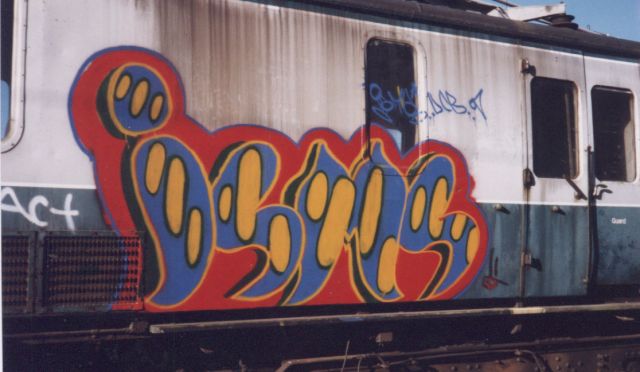
Isms and Street Lit

Image Source: www.graffitti.org
I participate on a few professional listservs for educators. Every once in a while someone will post a request for Street Lit titles to meet reader demand or programming ideas for Street Lit or they are seeking advice on how to approach the genre in the classroom or library.  

What I've noticed in the past few months is that there seems to be a few "isms" at play in the ways in which some educators perceive Street Lit and its readers. One  librarian posted that she was tired of the "slim pickings" of literature for African American youth as she was trying to locate "non-urban" titles. Another librarian chimed in with a "it's such a shame" kind of response.

I was bothered by this exchange, and disappointed. I then posted to the listserv my response and suggested that the librarian basically do her job and do the research to find the authors and titles she needs for her service community instead of posting thoughtless musings about the state of African American literature. Another librarian posted to try to calm my angst. While the compromise was/is appreciated, it didn't work for me...I duly wrote a full response to articulate why I was feeling annoyed. I'd like to share my full response below. Please post back and let me know what you think.

----------------------------

"I'm not saying there should be a broad spectrum of human experience in African American literature, I am saying that there IS a broad spectrum of human experience in African American literature. Af. Am. literature wasn't born 12 years ago when The Coldest Winter Ever was published. Maybe we aren't asking our students the right questions when it comes to fully understanding what it is they want to read. Perhaps they want to go beyond the problem novel, maybe they want to read horror - there's Af. Am. authors who write that ... or maybe they would be interested in romance novels or science fiction - OR - maybe they want to read a biography or poetry.

I believe we have to be realistic also, and accept the fact that Black people in America ARE an urban people, because Americans are an urban people. As of 2008, 82% of America lives in metropolitan areas. Of the 42 million African Americans, about 60% of us live in cities. The median income for African Americans is about $32K/year. (sources: http://www.census.govhttp://www.infoplease.com/spot/bhmcensus1.html).

Now if we take into consideration the publishing industry and what they do and why they do what they do - we understand that - they're going to publish what appeals to the masses. For me, it's not like anyone in the U.S. is writing or publishing any deep, empowering, OMG-esque stuff right now. If you look at the NYT bestsellers list - the fiction list is mostly escapist fluff. And for me, as a librarian, that's all right. The public reads.

Now I know I'm in the minority on this view, but I don't see a "huge discrepancy" in the publishing trends of African American literature, especially since for the past decade, we have been having a boon of African American entrepreneurs running their own, credible publishing firms. And yes, they publish street lit. But they also publish Christian fiction, romance, and other genres. Even the street lit publishers are branching into other things. Also, I think that when we decide to include all African American experience in our readings and in our research to share with the teens we're working with, we'll find a lot of authors and titles which perhaps missed our radar before. I'm taking about Caribbean, Haitian, African, and Latino (yes, Black Latino), and Black Indian works. I'm talking about Black Christian, Jewish, Islamic, Buddhist, kinds of works. I'm talking about GLBTQ works. I'm talking about those experiences - I'm talking about all of us. 

And lastly, I'd like to share this. I was recently talking to a Street Lit author - one of the biggest authors - and this author also publishes novels with their publisher - in the genre of fantasy. But you'd never know it because the novels are published under a nom de plaume. When I asked the author why they don't use their real name, they said the market shows that neither Whites nor Blacks would want to read someone like this person in this particular genre. Bottom line - even authors have to eat. And this brings up the question also that - for real? for real? Alot of times we dont' know WHO is writing WHAT. So while we are moaning about not enough of this or not enough of that .... those who are trying to give us enough aren't being supported enough in order to keep giving us what we perceive we lack.

And the beat goes on...."

02 March 2011

The Author and the Teen Reader in Street Lit

An excerpt from my essay, “Hermeneutical Understandings: Urban Teen Readership in Hip Hop Fiction” (2006). Parts are edited for clarity; such as “Hip Hop Fiction” being more accurately described as “Street Lit.”

When we think about the themes and plots of Street Lit, we see stories about a day in the life of the ‘hood where inner-city people are experience daily living struggles, navigate intense personal relationships, maybe participate in illegal activities, and all too often dying at the hands of someone’s gun. Name brand clothing labels, cars, and accessories are detailed in the stories to create a clear picture of what characters are wearing and driving. Amidst the chaos of abuse, violence and hustling, the characters are portrayed as looking very expensive.

When inner-city teens read these themes and plots over and over again, book after book (which they do), such reading ignites the imagination of the reader such that they are able to locate themselves within the context of the stories  (Morris, etal, 2006). Dennis Sumara (1996), a reader response theorist and educator, advises us that when we read, we respond to the text based on the social and cultural context in which the reading occurs.

Image Source: http://dotheknowledge.com
Just by the act of reading in and of itself, there is an “indeterminacy filling” (per Sumara), that occurs when the imagination is invoked. The gap between the imagination and reality is filled when we read text, creating heightened thinking by the reader. Thus, when inner-city teens read Street Lit, their imaginations re-create their worlds inside their minds, thus filling the gap between the imagination and their reality.

Just the pure act of reading Street Lit validates the readers’ reality of urban inner-city life, because it connects the fantastical (the sheer trauma of the drama in ghetto life) with narratives that say, “Yes, this exists, yes, this is real.” This validation empowers the reader to be open to negotiating their reading of their worlds, with an entry into critical analysis and evaluation of their environment, the people in it, as well as their own location and interaction within their own world. In Street Lit, it is the streets telling its stories back to the people of the streets.

This is powerful stuff. Street Lit has affected urban teen readers in a significant way because the pure act of reading ignites a magical connection between what was previously viewed (or read) as frivolous entertainment, to a more critical lens of hermeneutical interpretation. Once this bridge has been made, the reader’s worldview broadens and they are then asking harder questions like, “Wut about doze video gurls?” Through a gaining of critical analysis with a slower reading of their lived reality (via fiction), this new skill of critical analysis is now a part of the reading of their worlds.

When an author publishes a text, a contract (if you will) is formed between author and reader where a relationship is formed based on what I call "textual trust." When the reader decides to go past the book cover and the title, their choice to read the book infers that the reader trusts the author. Stories that relate to the reader in some way inspired "textual trust." This trust is hermeneutic-ally invested so that the reader reads through the book.
While this trusting bond may not have been the intent of the writers of Street Lit (after considerable reading and research of this genre, I posit that many authors write to be heard; to claim voice to the reading of their own worlds), this trust is an important caveat for teen readers in particularly, due to the developmental stage of life they are in, and how they process information based on their lifestage of adolescence (Appleyard, 1991).
In a world (the inner-city) where it is hard to have faith in stability or consistency due to the ever impending threat of confusion, chaos, violation and/or physical violence, to be able to trust what one reads within the ignited hermeneutic imagination of the environment of a Street Lit novel can be a significant contributor to enhancing the literacy of inner-city teen readers.
For teens to read narratives that play out the dramas of their everyday lives without them having to suffer real-life repercussions, wounds, or consequences of those dramas serves as a cautionary reconciliation of “yes, this is life in the ‘hood,” and “been there, done that, I don’t have to go out like that.” (Meaning, “I don’t have to end up like that, that doesn’t have to be me.”) Just as contemporary young adult fiction helps teens make sense of their worlds; Street Lit serves the same purpose for teens living in the same settings as those stories.
In any book, the author writes the book to talk to the reader. The reader listens to the author by reading the text. This is not a one-way monologue from the author to the reader; there is a dialogue here. With Street Lit, teens read these books in common, sharing their readings, and the books themselves (Morris, et.al., p. 2006). Eileen Landay (2004) tells us that reading fiction and biographies engages dialogue in three (3) ways: 1) within oneself (the author to him/herself and the reader to him/herself), 2) between the reader and the author, and 3) when text is shared between readers (p. 112).
Image Source: Vanessa Irvin Morris
In all these realms, we see Street Lit as a powerful conduit for readers finding authentic voice within the elements of their lives. The same happened for Hip Hop music, Spoken Word poetry, as well as the dance and art of Hip Hop. Where there was no voice for inner-city youths in mainstream culture, inner-city youths cried, “WE ARE HERE!” and found voice from their own streets to create their own culture.  The same has happened with the continuing proliferation of Street Lit.
Street Lit is a further reading (and re-reading) of inner-city voicelessness, storytelling from the streets into written text, to be re-read and re-told to the imagination, bridging lived/witnessed reality with the reality of the mind, validating the truth of one’s existence. Thus said, Street Lit is necessary for teens who seek the genre because it informs them that they are literate readers of their own worlds, and that they have a voice and place in life's reality. After all, the books are talkin'.

----------------------------------
References

Appleyard, J.A. (1991). Becoming a reader: The experience of fiction from childhood to adulthood. MA: Cambridge University Press.

Landay, E. (2004). Performance as the foundation for a secondary school literacy program: A Bakhtinian perspective. In A.F. Ball and S.W. Freedman (eds.). Bakhtinian perspectives on language, literacy and learning. NY: Cambridge University Press.

Morris, V.J., Hughes Hassell, S., Agosto, D.E., & Cottman, D.T. (2006). Street lit: Flying off teen bookshelves in Philadelphia public libraries. Journal of Young Adult Library Services (YALS) 5(1), 16-23.

Sumara, D.J. (1996). Private readings in public: Schooling the literary imagination. NY: Peter Lang.


04 July 2010

Fairytale Grit

These past couple of days, two signs came to me that inspired this post: (1) an email from author friend, Zetta Elliott, pointing me to a radio interview segment from on the media, about urban fiction, and (2) a link sent to me via my best friend, Jeff Bullard, about fairy tales being originally inspired by and written for urban dwellers centuries ago. Zetta and Jeff reminded me of a piece I wrote 3 years ago (and am in the process of re-reading and updating) entitled, Inner City Teens DO Read, which I presented as a paper at a conference at the University of Birmingham (UK), in August, 2007. I am posting the introduction to the piece, below:

*******************************************

Excerpt from "Inner City Teens DO Read" by Vanessa Irvin Morris (2007):

Introduction
Every society has a dominant narrative that chronicles the lives of its citizens. As far back as the work of the Grimm Brothers’ recordings of German folk tales, stories have been regarded as “reflections of the popular mind”. [1] We hold folklore within our collective consciousnesses, with stories such as The Frog Prince, Cinderella, and Hansel and Gretel, representative of fictionalized reflections of “the emotions, dreams and desires of every human being."[2] As communities live through history, new stories, perhaps “necessary fictions” of our contemporary worlds are told in various mediums—cinema, television, newspapers, music, art, and literature.[3] It is part of the human condition for us to feel connected to stories, especially to stories that we can relate to.[4] Stories that convey characters, settings, and experiences that represent how we look, sound, and feel, reveal truths about both the young and the old.[5] Our narratives validate our humanity.

In America, with its various class structures and ethnic subcultures, different groups maintain their own fictions, mythologies, legends, and folklores. These narratives reflect the daily lives of urban poor communities in sometimes fantastical yet perhaps relational and cautionary ways.[6] Currently there is a vibrant genre of narratives being published within the African American community that goes by several names: some call it ‘street/urban fiction,’ others call it ‘street lit,’ or ‘hip hop fiction.’ The novels being produced within this genre chronicle the daily lives of poor and working-poor Blacks and Latinos living in America’s inner-city enclaves. This literary sub-genre speaks from a collective memory of surviving the ghetto streets, of life and death in ‘da ‘hood.’[7] Such stories depict characters that experience unpredictable and all-too-often violent lifestyles as a result of choices made due to a lack of education and under- or non-employment. These street fiction novels not only illustrate the dramatic impact of living as a marginalized American, but the stories also communicate the gendered paradigms of womanhood and manhood, as characters try to make sense of the intense relationships illustrated within their fictionalized world.[8]

Outsiders to inner-city American life often struggle to accept that these fictionalized depictions of life in da ‘hood could closely parallel the realities that many Americans face; however my fieldwork in teen readership of this genre confirms that street fiction is largely based in a world that the readers recognize as real. A street fiction book club reader, or ‘clubber’, Angie[9] (age 16) stated: “It’s reality for me.” Another clubber, Tanya, (age 18), said: “It’s all life; non-fiction, fiction. It’s life.” [10] With American street fiction novels typically set in major metropolitan areas such as New York City, Atlanta, Los Angeles, Philadelphia, and Baltimore, teen readers often see themselves or someone they know (a friend or relative) within a narrative, and such recognition empowers them to make sense of their own lives.[11] Indeed, as Lily Owens wrote in The Complete Brothers Grimm Fairy Tales (Gramercy Books, 1981) of the Grimm Brother fairy tales, characters in oral fictions and folktales based on a parallel reality allow us to further understand the real:

“… however high or low, exaggerated or outlandish, the emotions and experiences of fairy-tale characters have their real-life counterparts … [we are] recognizing our world in theirs”.[12]

This paper is intended to show how young urban readers of street fiction read this genre in order to validate their own existence. There is a connection between the worlds depicted in street fiction novels and the worlds that inner-city teens navigate on a daily basis. Inner-city teens experience unique obstacles within their communities. Because teens are navigating these obstacles at the most intense developmental stage of their lives (adolescence), how they perceive their worlds is all the more intense and amplified.[13] In order to map the connection between the worlds of street fiction and real life ghetto worlds of its audience, it is necessary to place ourselves into the shoes of the reader, so that we may comprehend their localized narratives.[14] This is not an easy or attractive option as scholars studying today’s American inner-city often must accept the same raw and graphic conditions as the environments described in street fiction novels. However, such confrontation with the truth is necessary in order to document why teenagers living in such communities gravitate so heavily towards stories that parallel their experiences, rather than escaping into the polar-realities of other forms of literature.

This paper will also apply literary response theories to street fiction to illustrate how teen readers move beyond this genre to a heightened sense of literacy—one that allows them to employ a more refined reading and more enhanced critical literacy of their own lived worlds. Because the ghetto/inner-city is their primary world, I contend that even before they reach their teenaged years, most inner-city children are profoundly aware of their environments. Having worked with teens on a daily basis for nearly a decade, I have seen how street fiction aides in their overall comprehension of their surroundings. These ‘hip hop generationers’ have learned to combine both street literature and music to empower themselves. Looking at life critically in order to “know what’s going on” is key to their survival and street fiction plays an important role in not only heightening their resistances to the unsavoury people and locations surrounding them, but it also strengthens their resiliencies, allowing them to carve out a sober space within their neighbourhoods.


[1] Lily Owens, ed., The Complete Brothers Grimm Fairy Tales, Gramercy Books, 1981, pg. xiv.
[2] Ibid. 
[3] Michelle Citron, Home Movies and other Necessary Fictions, University of Minnesota Press, 1999.
[4] Owens, pg. xiv.
[5] Citron, 1999, pg. 139; Nathan Ausubel, ed., A Treasury of Jewish Folklore, Crown, 1948, pg. xviii.
[6] Michelle Fine and Lois Weis, The unknown city: The lives of poor and working-class young adults, Beacon Press, 1998; Elijah Anderson, Code of the Street: Decency, Violence and the Moral Life of the Inner-city, W.W. Norton & Co., 1999; Bonnie J. Ross Leadbeater & Niobe Way, Urban girls revisited: Building strength, New York University Press, 2007.
[7] Francois-Xavier Lavenne, Virginie Renard, and Francois Tollet, “Fiction, between inner life and
collective memory: A methodological reflection," New Arcadia Review, volume 3, 2005.
[8] Vanessa J. Morris, Denise E. Agosto, Sandra Hughes-Hassell, and Darren T. Cottman, “Street lit: Flying off teen bookshelves in Philadelphia public libraries,” Journal of Young Adult Library Services (YALS) 5, 1
(Fall 2006): 16-23.
[9] Note: All book clubbers’ names throughout the paper are pseudonyms.
[10] Book club field notes, 11 March 2005; 21 April 2007; 16 August 2007.
[11] Morris, et al, 2006.
[12] Owens, pg. xiv.
[13] Anderson, 1999; George Dimitriadis, Friendship, cliques, and gangs: Young black men coming of age in urban America, Teachers College Press, 2003.
[14] Dennis Sumara, Private readings in public: Schooling the literary imagination, Peter Lang, 1996; David Barton and Mary Hamilton, Local Literacies: Reading and writing in one community, Routledge, 1998.

StreetLiterature site *ON HIATUS*

Greetings, This site is *on hiatus* until further notice. There are reasons: 1/ Since street lit has become pretty mainstream in publicat...